
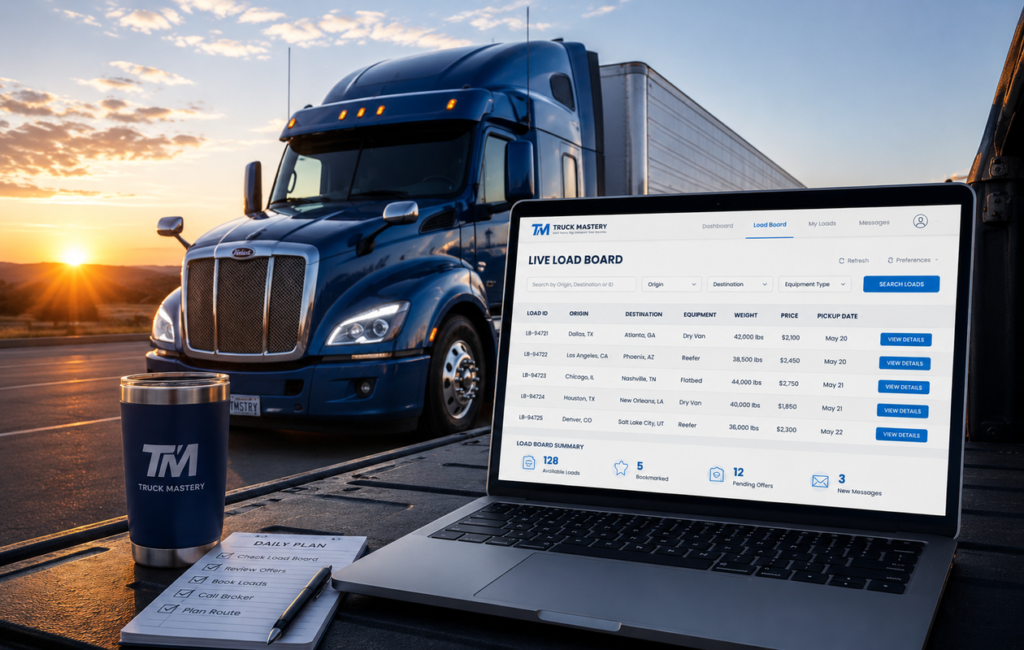
The Smartest Way to Launch Your Trucking Business — Even If You’re Starting From Zero
Starting a trucking company can create real financial freedom — but most new owner-operators get overwhelmed by paperwork, FMCSA requirements, insurance filings, broker packets, compliance issues, and expensive startup mistakes.
That’s exactly why businesses fail before hauling their first load.
At Truck Mastery, we simplify the entire process with a done-for-you trucking startup service that helps aspiring trucking business owners become fully compliant, legally established, and ready to operate faster — without confusion or delays.
Whether you want to run under your own authority or build a long-term trucking company, this guide walks you through every major step you need to understand before getting on the road.
Why Most New Trucking Companies Struggle
Many new trucking business owners:
- Apply for authority incorrectly
- Buy a truck too early
- Miss required filings
- Overpay for insurance
- Don’t understand compliance requirements
- Get delayed by FMCSA paperwork errors
- Start without a proper business structure
The trucking industry rewards preparation.
The good news? You don’t need to figure everything out alone.
Truck Mastery helps handle the complex setup process so you can focus on building revenue instead of battling paperwork.
Step 1: Form Your Trucking Business Legally
Before hauling freight, you need a legal business entity.
Most trucking companies start with an LLC because it helps separate personal and business liability.
You’ll also need:
- An EIN (Employer Identification Number)
- State business registration
- Business formation documents
Without these, you cannot properly:
- Open a business bank account
- Apply for authority
- Obtain insurance
- Sign broker agreements
What Truck Mastery Does For You
Instead of navigating confusing state filings yourself, Truck Mastery can help process your business setup properly from the beginning to avoid delays later.

Step 2: Open a Business Bank Account
One of the biggest mistakes new trucking owners make is mixing personal and business finances.
A dedicated business bank account helps:
- Keep accounting clean
- Build business credibility
- Simplify tax filing
- Manage trucking expenses properly
You’ll typically need:
- LLC documents
- EIN confirmation
- Operating agreement
Pro Tip
Many lenders, factoring companies, and brokers prefer working with carriers that operate professionally from day one.
Learn how Truck Mastery helps new trucking companies stay compliant
Step 3: Apply for Your MC Number & USDOT Authority
This is one of the most important steps in starting a trucking company.
You’ll need:
- USDOT Number
- Motor Carrier (MC) Authority
- FMCSA registration
Errors during this stage can delay your activation for weeks.
Many first-time applicants accidentally:
- Choose the wrong authority type
- Submit incomplete information
- Miss compliance deadlines
Why Many New Carriers Use Done-For-You Services
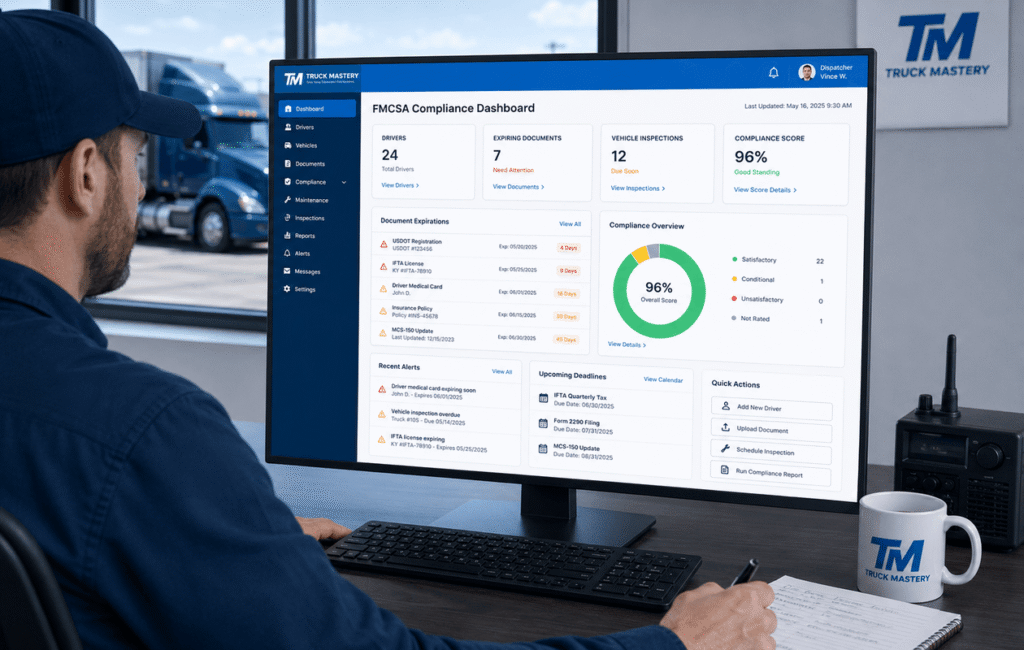
FMCSA filings can become confusing quickly, especially for first-time owner-operators.
Truck Mastery helps streamline this process by helping ensure your filings are submitted correctly the first time.
Step 4: File Your BOC-3 and UCR Registration
These are mandatory trucking compliance requirements.
BOC-3 Filing
A BOC-3 designates legal process agents in states where you operate.
UCR Registration
The Unified Carrier Registration (UCR) is an annual federal requirement many new trucking companies forget.
Missing these filings can create compliance issues or even operational interruptions.
Truck Mastery Advantage
Instead of researching every compliance step yourself, our team helps coordinate the required startup filings so your authority process stays on track.
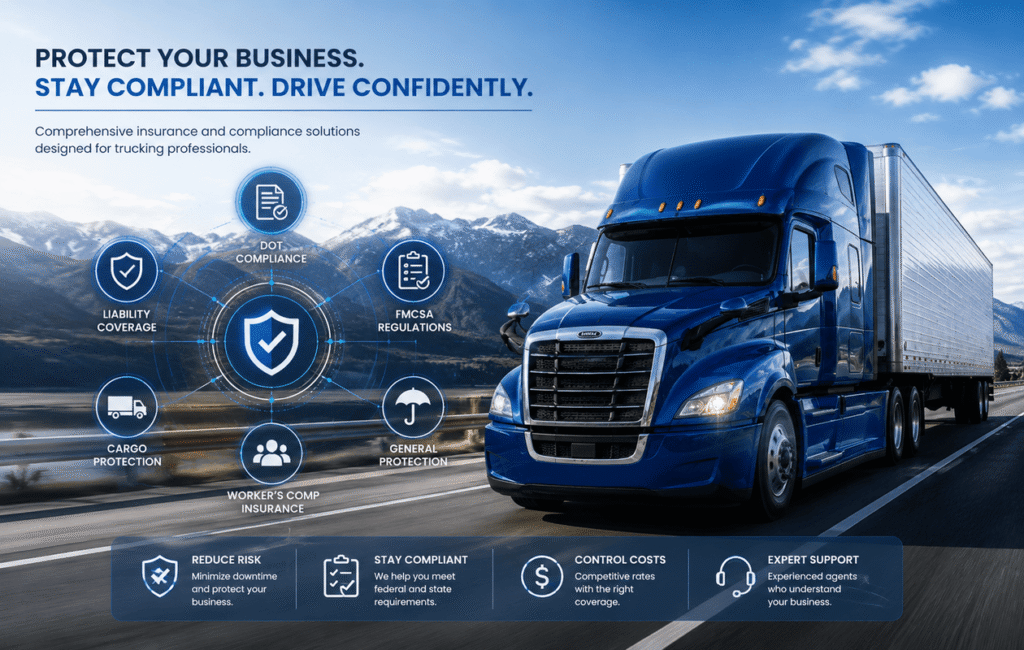
Step 5: Secure Commercial Trucking Insurance
Insurance is one of the largest startup expenses in trucking.
Your premiums depend on:
- Driving history
- Equipment type
- Cargo type
- Operating radius
- Business history
Many new trucking companies are shocked by insurance costs because they begin the process without guidance.
Common Insurance Mistakes
- Applying too early
- Choosing incorrect coverage
- Using inexperienced providers
- Failing to align coverage with authority activation timing
Truck Mastery helps clients understand the insurance process before costly mistakes happen.
Step 6: Set Up Factoring & Fuel Programs
Cash flow is everything in trucking.
Brokers often pay invoices in:
- 30 days
- 45 days
- Sometimes even longer
Factoring companies help trucking businesses get paid faster.
Fuel programs can also reduce operational costs significantly over time.
Why This Matters
New trucking businesses often fail because they run out of working capital — not because freight isn’t available.
Truck Mastery helps guide clients toward operational systems that support long-term profitability.
Step 7: Complete Your DOT Medical Requirements
To operate legally, drivers must maintain:
- A valid CDL
- DOT medical certification
- Driver qualification documentation
Missing medical compliance requirements can lead to violations and downtime.
Suggested Internal Link
Find Out What Your Trucking Business Needs
Step 8: Prepare for Load Boards & Freight Access
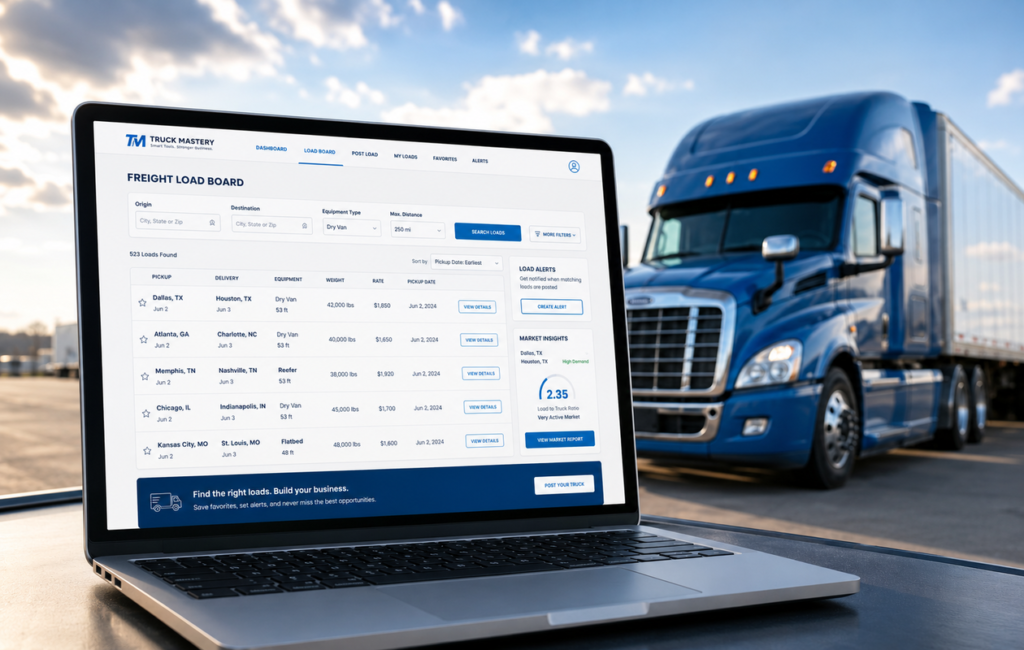
Once your authority becomes active, you’ll need access to freight opportunities.
Many carriers use:
- DAT
- Truckstop
- Broker networks
- Direct shipper relationships
However, access alone doesn’t guarantee profit.
New carriers also need:
- Proper setup packets
- Carrier profiles
- Compliance documentation
- Rate negotiation knowledge
Truck Mastery Helps You Start Smarter
Instead of entering the market blindly, we help position new trucking businesses for a smoother launch.
Step 9: Buy the Right Truck — Not Just Any Truck
One of the biggest mistakes new owner-operators make is buying equipment too early.
Before purchasing a truck, you should understand:
- Your freight niche
- Insurance impact
- Expected operating costs
- Revenue projections
- Maintenance budgets
Smart Truck Purchasing Starts With Planning
A trucking business should be built strategically — not emotionally.
Truck Mastery helps clients understand the startup process before major financial decisions are made.
Step 10: Install an ELD & Stay Compliant
Electronic Logging Devices (ELDs) are federally required for most carriers operating under authority.
ELDs help track:
- Hours of Service
- Driver logs
- Compliance records
Proper setup matters because compliance violations can hurt your business quickly.
Step 11: Prepare for the FMCSA New Entrant Audit
Most new trucking companies receive a New Entrant Safety Audit after activating authority.
This process verifies:
- Insurance compliance
- Driver qualification files
- Hours-of-service tracking
- Safety procedures
Many new carriers panic because they were never properly prepared.
The Truck Mastery Difference
We help clients understand what documentation and compliance procedures are expected from the beginning.
Step 12: Start Building Broker Relationships
Once operational, your next priority is building consistent freight relationships.
This includes:
- Completing broker packets
- Verifying insurance requirements
- Maintaining safety compliance
- Establishing reliability
Successful trucking companies focus on relationships, not just loads.
Why More New Trucking Businesses Choose Truck Mastery
Starting a trucking company involves far more than simply getting an MC number.
You need:
- Proper business setup
- Compliance guidance
- Filing support
- Operational readiness
- Startup strategy
That’s where Truck Mastery comes in.
Instead of spending weeks researching confusing requirements yourself, our done-for-you trucking startup service helps simplify the process so you can focus on growing your business.
Ready to Start Your Trucking Company?
If you’re serious about launching your trucking business the right way, Truck Mastery can help simplify the process from startup to operational readiness.